Artificial intelligence has been used to design brand-new viruses that are fully functional and can replicate in the laboratory, reports BBC.
The study, led by researchers at Stanford University in the United States and published in the journal Science, resulted in 16 newly designed bacteriophages—viruses that infect bacteria but pose no threat to humans.
"This is a next step in the complexity that's designable by generative AI," said Brian Hie, assistant professor at Stanford University.
"It is the first time generative AI has been used to design a complete genome—something that can replicate and have other functions inside cells."
Unlike large language models such as ChatGPT, which predict sequences of words, the AI systems used in the research—Evo1 and Evo2—were trained to predict the "language" of DNA using genetic data from viruses, bacteria, plants, and humans.
The researchers then fine-tuned the models to generate bacteriophage genomes. After synthesising 302 AI-designed candidates in the laboratory, they found that 16 successfully infected and killed E. coli bacteria.
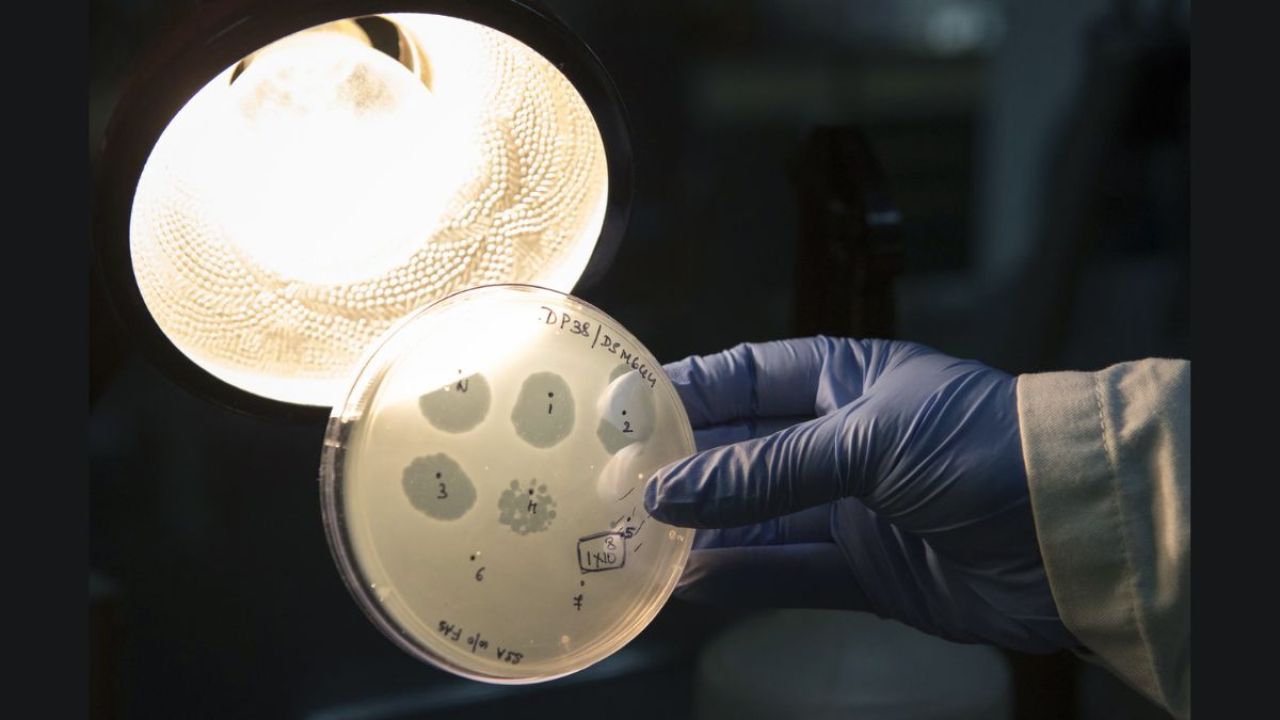
Samuel King, a PhD student involved in the project, said the team realised the viruses were functioning when clear spots began appearing on bacteria-covered petri dishes, indicating that the phages were destroying the bacterial cells.
Hie said the technology has the potential to "massively improve human health" by enabling scientists to create new medicines and therapies more efficiently.
In a commentary published alongside the study, Dr Thomas Inglesby and Dr Moritz Hanke of the Center for Health Security at Johns Hopkins University said the research raises "urgent biosafety and biosecurity questions."
Experts said AI's ability to design viral genomes now demands stronger safeguards, warning that viruses capable of causing disease should never be intentionally created.
The bacteriophage genomes designed in the study contain about 5,400 DNA base pairs, while even the simplest living cells require roughly 500,000 base pairs.
Marc Güell, professor of synthetic biology at Pompeu Fabra University in Spain, called it a "very significant turning point," saying it marks the first time scientists have begun designing biology on a computer.
Patrick Cai, chair of synthetic genomics at the Manchester Institute of Biotechnology, said the implications extend beyond bacteriophages, suggesting AI is beginning to understand the biological principles shaped by evolution and could eventually assist in designing entirely new genomes.
AI / safety
While most comments will be posted if they are on-topic and not abusive, moderation decisions are subjective. Published comments are readers’ own views and The Business Standard does not endorse any of the readers’ comments.
Copyright © 2026 THE BUSINESS STANDARD
All rights reserved.