

Garrincha, Pelé, Rivellino, Ronaldo, Ronaldinho...the list could go on. Brazilian football has never lacked legendary dribblers. Yet despite that rich tradition, this World Cup has painted a very different picture.
According to sports data and analytics platform Opta, Brazil have recorded the lowest dribbling success rate among all 48 teams in this year’s World Cup group stage. Carlo Ancelotti’s side attempted 59 dribbles but completed only 20, giving them a success rate of just 34 per cent.
Brazil rank joint seventh for total dribble attempts at this World Cup. They share that position with Curaçao, the smallest nation by population to compete in the tournament, who were eliminated in the group stage. African teams have dominated the dribbling charts.
Morocco lead the way with 76 dribble attempts, followed by Algeria with 75 and Ivory Coast with 70.
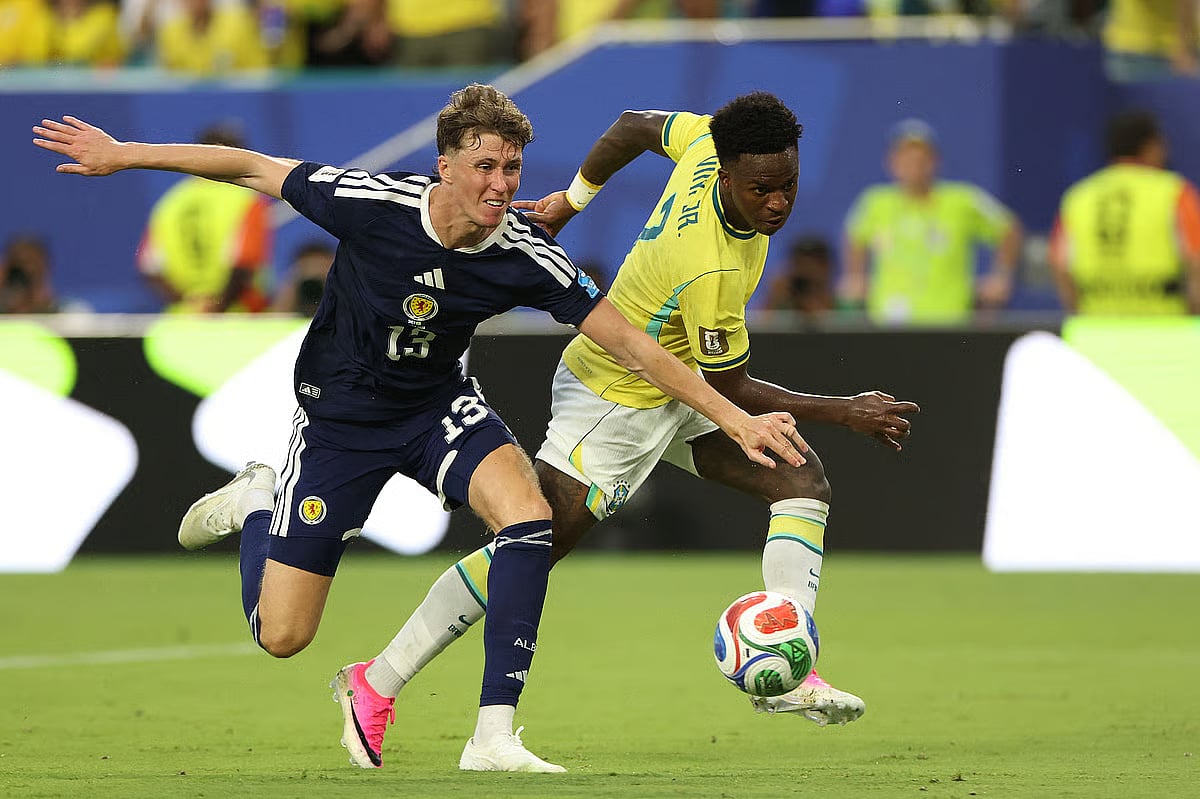
Among Brazil's players, Vinícius Júnior has been the team's most successful dribbler, completing seven dribbles. Five of those came against Scotland, a match in which he also scored twice. His other two successful dribbles came against Haiti.
Croatia top the rankings for dribbling efficiency, successfully completing 68 per cent of their attempts. They completed 23 of their 34 dribbles. However, if only the total number of successful dribbles is considered, Ivory Coast lead the field with 42 successful dribbles.
First touch
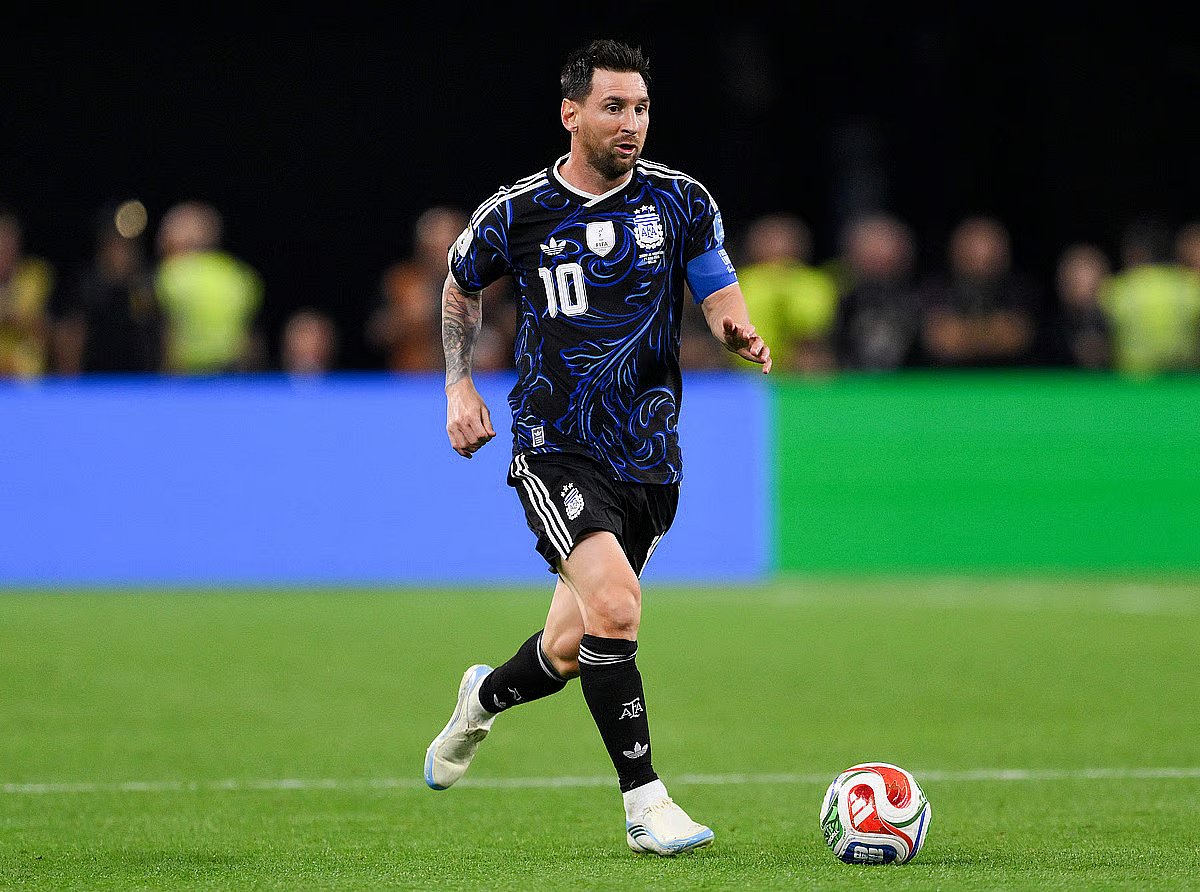
A total of 215 goals were scored across the 72 group-stage matches at this World Cup. More than half of them (119) came from a player's first touch. Three of Erling Haaland's four goals for Norway and three of Lionel Messi's six goals were scored in this manner.
The tournament has averaged 2.9 goals per match in the group stage, surpassing the 2.5-goal average recorded at the Qatar World Cup. It should be noted, however, that the Qatar tournament featured 32 teams, whereas this year's expanded competition includes 48 teams and therefore more matches.
Twenty-five per cent of the goals in this year's group stage came from set pieces. According to Opta, 28 goals originated from corners, five from direct free-kicks, six from throw-ins and seven from attacking moves created from set-piece situations. Eight goals came from penalties.
At the Qatar World Cup, 21 per cent of group-stage goals came from set pieces, with 25 of the 120 goals scored in that phase. So far in this tournament, Germany, the Netherlands and France are the highest-scoring teams, each with 10 goals.
Only one team failed to score in the group stage: Panama. Playing in their second World Cup, they were eliminated without finding the net. All four tournament debutants scored at least once in the group stage—Jordan (3), Cape Verde (2), Uzbekistan (2) and Curaçao (1).
Perfect tackling
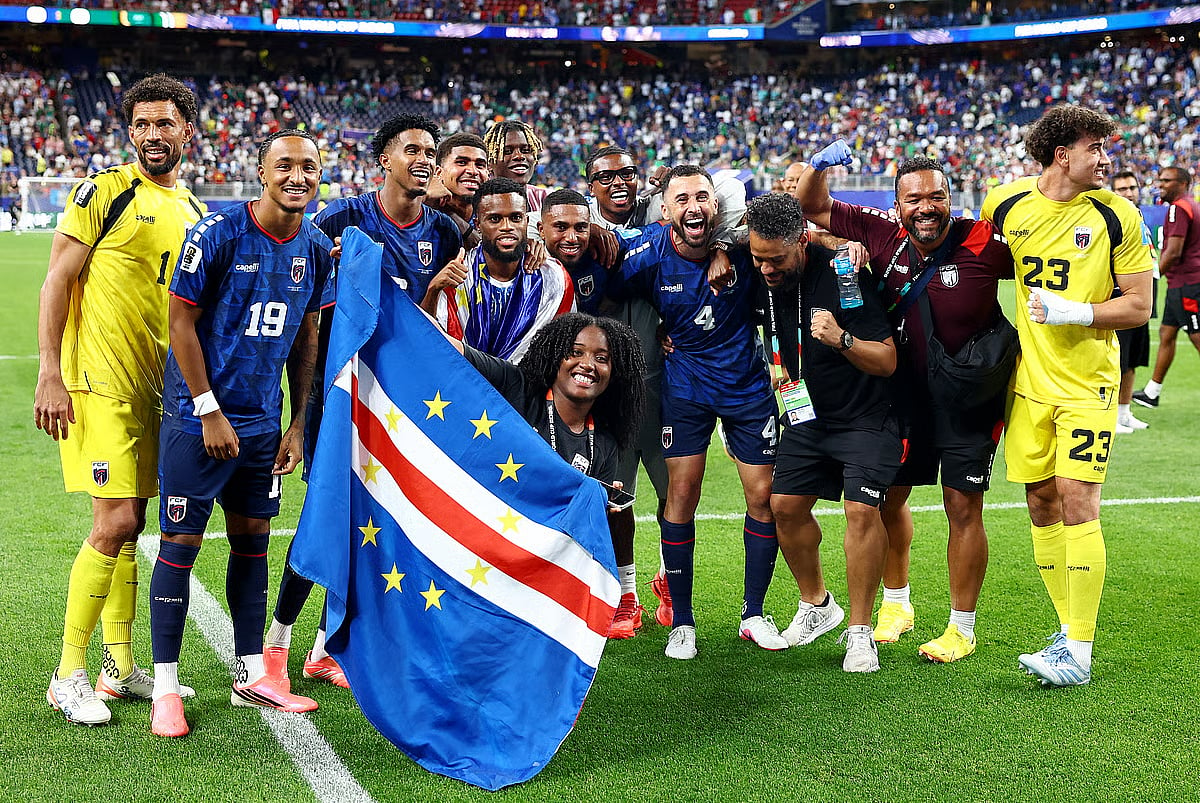
Tournament debutants Cape Verde have produced a tackling masterclass at this World Cup. They recorded a remarkable tackle success rate of 78 per cent, helping the small island nation reach the knockout stage.
England and Spain follow closely behind with tackle success rates of 76 and 75 per cent, respectively.
Colombia have the lowest tackle success rate at 49 per cent. Brazil were among the teams that attempted the most tackles in the group stage, making 58 in total. However, nearly half of those tackles (46.6 per cent) resulted in fouls.
Their long-time rivals Argentina have faced a similar problem. Messi's side attempted 62 tackles during the group stage, with 34 per cent ending in fouls.
Knockout opponents of Argentina, Brazil, other World Cup heavyweights


