

Deposed Prime Minister and President of the Awami League, Sheikh Hasina, has announced that she plans to return to Bangladesh next December and surrender before the court. She has also called on party leaders living in exile to return to the country with her.
However, there is uncertainty even within Awami League about whether this is a genuine plan or a political strategy to revive the party's activities. Many party leaders say that beyond the question of whether Sheikh Hasina herself will return, the bigger issue is how many leaders and activists would ultimately be willing to take such a risk under the current political circumstances.
Last Thursday night, Sheikh Hasina gave a telephone interview to the UK-based news agency Reuters. During the interview, she specifically stated that she intends to return to Bangladesh next December.
On 5 August 2024, she was removed from power amid a mass uprising led by students and the public and subsequently fled to India, bringing an end to her uninterrupted rule of more than 15 and a half years.
According to a United Nations report, nearly 1,400 people were killed during the mass uprising in July and August.
After Sheikh Hasina left the country, many of Awami League's senior leaders, former ministers in her government, party members of parliament, and numerous grassroots activists went into hiding. Later, photos and videos emerged showing many of them in India, the United Kingdom, the United States, Canada, the United Arab Emirates, and various European countries. Many leaders and activists who remained in Bangladesh were arrested.
In May of last year, Awami League's activities were banned. Since then, the party's political activities have been largely confined to the online sphere. Apart from that, there have been a few scattered flash demonstrations, which are generally viewed less as evidence of the party's organisational strength than as attempts to signal that it still exists.
In an interview with Reuters, Sheikh Hasina said that she and other Awami League leaders wanted to return to Bangladesh voluntarily and surrender before the courts. She said: "I have to return. My party's leaders and activists are facing severe repression. If death comes, I want to die on my own soil—where my parents are buried and where their blood was shed."
However, according to senior Awami League sources, the December timeline may also be symbolic. It could be part of a strategy to energise party members, build pressure for the lifting of the ban on the party, and reclaim political space.
In May of last year, Awami League's activities were banned. Since then, the party's political activities have been largely confined to the online sphere.
Earlier, in an interview with India's NDTV on 28 June, Sheikh Hasina had also said she intended to return to Bangladesh within the current year. Her remarks were widely reported in Indian and international media. Following several internal online meetings of the Awami League last week, discussions spread among party members that she had mentioned returning in December.
According to several Awami League leaders, after the 13th National Parliamentary Election on 12 February, Sheikh Hasina frequently urged party leaders and activists living abroad to return to Bangladesh. However, no prominent leader has responded to her appeal so far. Instead, many have left India for other countries due to concerns about security and possible arrest.
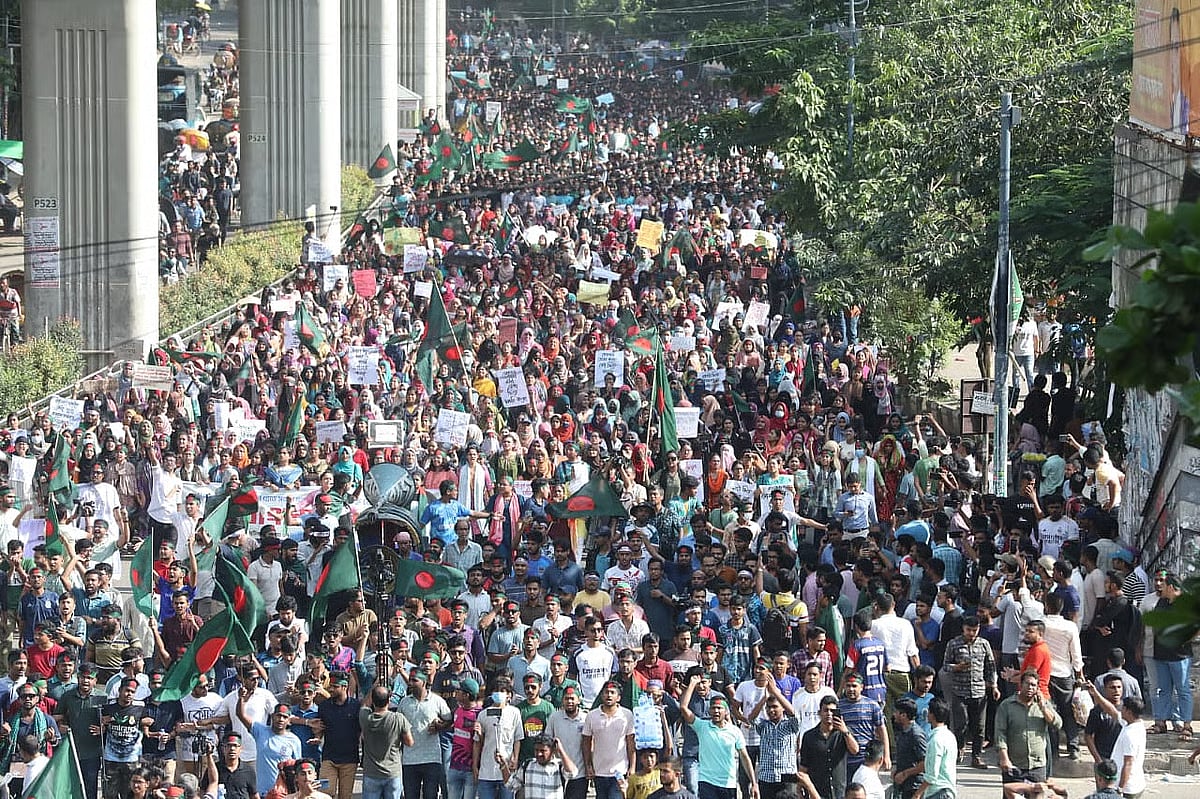
After Sheikh Hasina left the country, the interim government led by Professor Muhammad Yunus governed Bangladesh for approximately one and a half years. During this period, hundreds of murder cases were filed against Sheikh Hasina, senior Awami League leaders, and many members of the law enforcement agencies. The International Crimes Tribunal also began proceedings against Sheikh Hasina and several other party leaders.
On 17 November last year, Sheikh Hasina and former Home Minister Asaduzzaman Khan Kamal were sentenced to death in a case involving crimes against humanity. Several other cases against them are also currently pending.
Following the death sentence, the interim government sent a letter to the Indian government requesting the extradition of Sheikh Hasina and the other convicted individuals. Although India said it was examining the matter, no public progress has been made regarding extradition. The current BNP-led government has also stated that it intends to bring Sheikh Hasina back to Bangladesh to enforce the court's verdict. Her continued stay in New Delhi and Bangladesh's extradition request have significantly affected relations between the two countries.
Strategy or mere rhetoric?
After news of Sheikh Hasina's announcement that she would return to Bangladesh became public, this reporter spoke with several Awami League leaders who remain in hiding. Most said they were unaware of any concrete political strategy or preparations behind the announcement.
With nearly five months remaining before December, much will depend on the country's political situation, the position of the ruling BNP government, the attitudes of opposition parties such as Jamaat-e-Islami and the National Citizen Party (NCP), and the role of the international community.
Zahir Uddin Swapan, Information and Broadcasting MinisterSheikh Hasina's remarks are capable of creating unrest and that the government is viewing the entire issue strictly from a legal standpoint.A senior Awami League leader, speaking to Prothom Alo on condition of anonymity, said that Sheikh Hasina has been the party's president for 44 years and maintains extensive international connections. She is also fully aware of the party's current fragile condition. Nevertheless, since she has publicly stated that she will return, she may have her own preparations in place. However, what preparations the party itself has made, and what strategy it intends to follow, remain unclear.
He also expressed doubts about how effectively the party can organise publicly or exert pressure on the government while its activities remain banned.
The leader further said that many party members who have substantial financial resources and security abroad are unlikely to return to Bangladesh and face imprisonment simply because Sheikh Hasina has called on them to do so. In his view, they are more likely to wait until the political environment becomes more favorable. As a result, although Sheikh Hasina's announcement may inspire strong emotions among party members, there remains considerable uncertainty over whether it will lead to a large-scale collective return.

In her Reuters interview, Sheikh Hasina said that although the Bangladesh government is asking India to extradite her, she intends to return to Bangladesh of her own accord.
She added, "Almost all of our leaders and activists have cases filed against them, and many are in hiding. So I have told them, 'This time I am returning to Bangladesh. One day, all of you should come as well. We will all surrender before the court together.'"
Expressing confidence in the judicial system, Sheikh Hasina said, "Once the legal proceedings begin, people will realise what a farce this court is. And that is exactly what I want to prove."
How much confidence does she really have in the people?
In her interview with Reuters, Sheikh Hasina said that any government that remains in power for a long time is bound to make mistakes, and that it is the people who have the right to judge both the successes and failures of her administration.
She also said that even if she is convicted or barred from contesting elections, Awami League should not remain banned. According to her, it is the people, not the government, who should decide the party's future.
As part of efforts to reorganise Awami League, she claimed to have held online meetings with party leaders and activists from 125 of Bangladesh's 300 parliamentary constituencies.
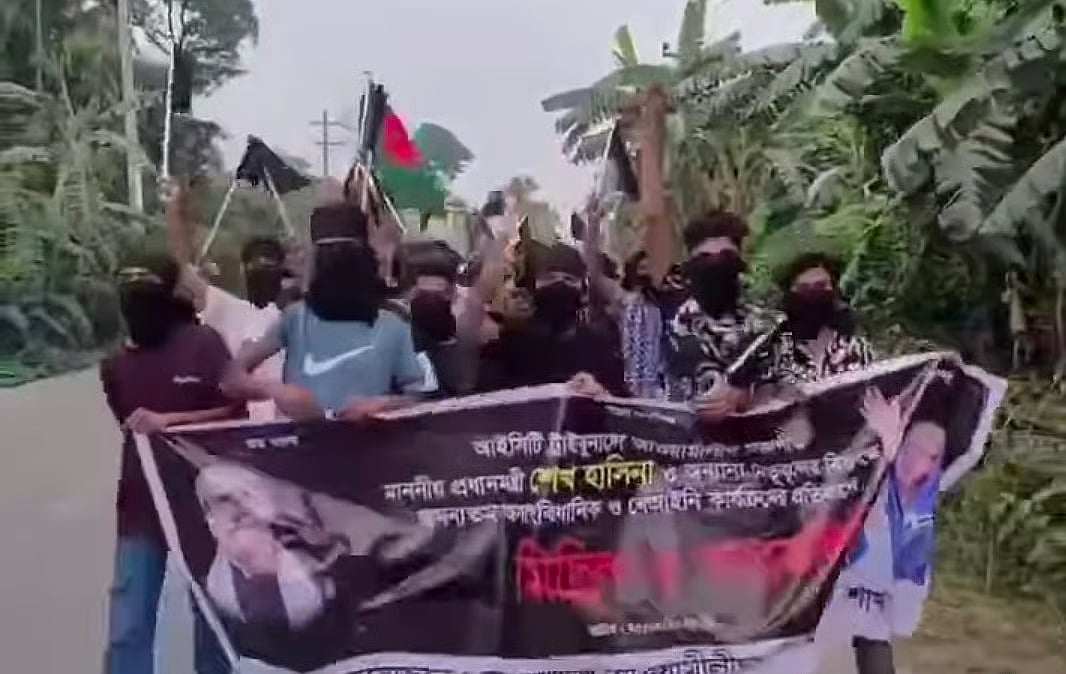
However, despite speaking about leaving the judgment to the people, Sheikh Hasina has not publicly expressed regret over the killings that occurred during the student-led mass uprising. Instead, she and other Awami League leaders continue to portray the movement as the result of domestic and foreign conspiracies and have maintained an aggressive tone toward the leaders of the uprising.
As a result, while her announcement of returning to Bangladesh signals an attempt at political comeback, it has not been accompanied by any indication of self-criticism or acknowledgment of responsibility for past events.
Reaction in the political arena
For several months, there has been a steady stream of statements regarding Sheikh Hasina's possible return to Bangladesh and the political comeback of Awami League. Indian media, including outlets considered close to the Indian government, have prominently covered the issue.
Some political analysts believe that statements about Sheikh Hasina's return may have some level of support or coordination from certain authorities in India.
Sheikh Hasina's continued stay in New Delhi and Bangladesh's extradition request have significantly affected relations between the two countries.
Meanwhile, Bangladesh is marking the second anniversary of the student-led mass uprising. Against this backdrop, Sheikh Hasina's remarks about returning have already generated political reactions within the country.
Political analysts believe that the timing of her announcement was influenced by the anniversary of the uprising as well as BNP Acting Chairman Tarique Rahman's visit to China.
At the same time, Sheikh Hasina's continued stay in India remains one of the principal obstacles to normalising relations between Bangladesh and India, although India appears interested in advancing bilateral relations without making her presence the central issue.
"The government Is treating the matter strictly as a legal issue"
Nahid Islam, a leading figure in the July Movement and convener of the National Citizen Party (NCP), told journalists on Friday, "Today we saw in an interview that someone is planning to return to the country in December. The country has already suffered from 16 years of destruction. Now we also want her to return—so that the death sentence can be carried out."
Asked about Sheikh Hasina's interview, Information and Broadcasting Minister Zahir Uddin Swapan told Prothom Alo that the entire matter falls under the jurisdiction of the law.
He noted that the International Crimes Tribunal has prohibited the broadcast of Sheikh Hasina's statements and expressed confidence that the country's media would respect the court's order.
The minister further said that Sheikh Hasina's remarks are capable of creating unrest and that the government is viewing the entire issue strictly from a legal standpoint.


