

A luxury guest house built under the Tk 100 billion Karnaphuli Tunnel project has remained unused since its completion, while the tunnel itself is struggling to generate enough toll revenue to cover maintenance costs.
After failing twice to attract suitable bids, the Bridges Division is making another attempt to lease out the facility.
The Karnaphuli Tunnel beneath the Karnaphuli River in Chattogram was inaugurated in October 2023 during the rule of Awami League (whose activities now banned). As part of the same project, a 72-acre service area was developed beside Parki Canal in Anwara, where the guest house is located.
Despite being completed, the guest house has never been opened. Bridges Division officials attribute the delay to a shortage of manpower.
What is inside the guesthouse?
The service area, which was added to the project midway through implementation, includes a guest house, bungalows, rest houses, a replica of the tunnel, a convention centre, a health centre, a helipad, a mosque, police and fire service stations, and a museum.
The facilities are equipped with air-conditioning systems with a combined capacity of 1,182 tonnes.
The guest house features a modern, fully furnished 5,000-square-foot bungalow with six rooms and a swimming pool. The complex also includes 30 rest houses.
According to the Bridges Division sources, the guest house was built with the expectation that then-prime minister Sheikh Hasina would stay there during visits to the project.
Around Tk 450 million was spent on constructing the service area, which the government is now seeking to lease out.
Bridges Division Secretary Mohammad Abdur Rouf told Prothom Alo that the initiative to lease out the guesthouse was taken with the aim of increasing revenue from the tunnel project.
He said an income target has been set, taking into account the costs incurred for their construction. If appropriate bids are received accordingly, the facility will be leased out for a period of 29 years.
Bids fall short of expectations
Following the ouster of the Awami League in the 2024 mass uprising, the interim government took office and decided to boost revenue by leasing out the tunnel project installations, including the guesthouse.
International tenders were called twice in July and September last year to lease the guesthouse for a 29-year term. However, no foreign firms responded. While two or three local companies expressed interest, their proposed bids were lower than the Bridge Authority's estimated value and were subsequently rejected.
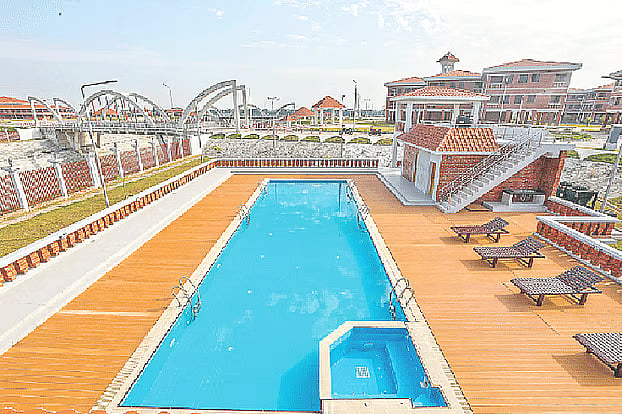
A third round of tendering has been initiated this year. The deadline for the submission and opening of these bids is 13 July. Only then will it become clear which institution is offering what amount to secure the lease.
Bridges Division sources revealed that 13 domestic and foreign companies have purchased tender documents in this round so far. These include JS Trade International, Chittagong Asian Apparels, LV Structure, ATN Homes, The Cox Today, Sweet Dream Management, Richmond Hotel and Suite, Khan Properties (USA), Unique Hotel and Resorts, Irving Hotel and Hospitality and Best Holding.
According to the tender conditions, the selected lessee will receive the guesthouse facilities on an ‘as-is’ basis. Under the agreement, the lessee will be responsible for the operation and maintenance of the property and must pay the rent in a minimum of four annual installments.
Maintenance costs outweigh revenue
The gap between the projected potential of the tunnel and the current reality is staggering.
The project’s initial feasibility study estimated that an average of 28,350 vehicles would use the tunnel daily by 2025. Currently, that number hovers around only 4,000, just 14 per cent of the initial forecast. The study had also indicated that the tunnel would become profitable if it handled at least 17,375 vehicles per day.
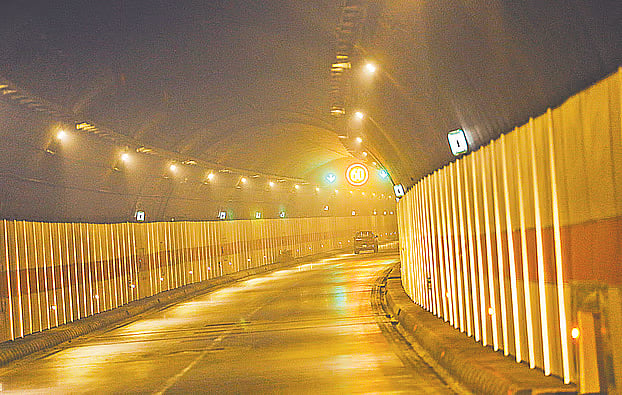
At present, the tunnel generates around Tk 30 million in toll revenue each month, while monthly payments to the maintenance contractor amount to about Tk 115 million, leaving an average monthly deficit of roughly Tk 80 million.
A recent impact assessment report by the Implementation Monitoring and Evaluation Division (IMED) warned that increasing toll rates would not solve the crisis. To tap into the tunnel’s full potential, the report recommended integrated planning, accelerated industrialisation and improved transportation systems.
For the tunnel to become economically sustainable, the government must rapidly develop port-based industries at the Anwara end and ensure coordination among the authorities managing the Karnaphuli Dry Dock, China EPZ and Korean EPZ.
On 9 June, the Executive Committee of the National Economic Council (ECNEC), chaired by Prime Minister Tarique Rahman, approved a Tk 11.83 billion regional highway development project. Officials expect the project to improve connectivity to the tunnel.
According to the Roads and Highways Department, once implemented, the project will create a new economic corridor linking southern Chattogram with Cox's Bazar and Matarbari in Maheshkhali via the Karnaphuli Tunnel. It is expected to shorten the Chattogram–Cox's Bazar road route by about 40 kilometres and reduce travel time by around one hour.
Construction at a massive cost
The previous Awami League government undertook the Karnaphuli Tunnel project with the vision of transforming the port city into a ‘One City, Two Towns’ model, similar to China’s Shanghai. The tunnel connects Patenga with Anwara upazila in South Chattogram.
The project was implemented under a government-to-government (G2G) agreement with Chinese funding and constructed by a Chinese firm.
Although approved in November 2015, construction only began two years later due to delays in finalizing the loan agreement with China.
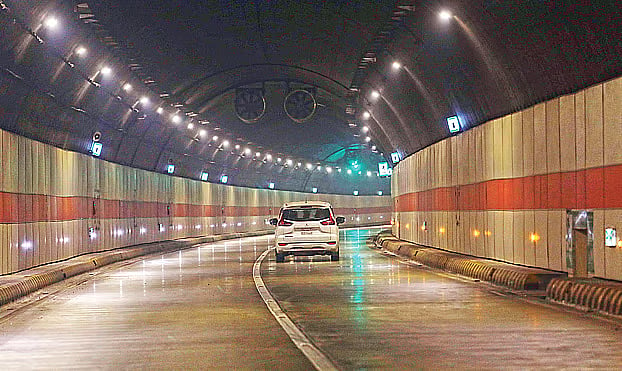
Initially, the project cost was estimated at Tk 8,446 crore. In 2020, the budget was increased to Tk 9,880 crore, citing rising land acquisition costs, higher duties and taxes and the relocation of utility lines. In 2021, authorities approved an emergency increase of another Tk 494 crore, bringing the total to Tk 10,374 crore.
According to Bridges Division sources, the second emergency cost hike was implemented specifically after the decision to build the 'Service Area' and guesthouse. A further increase of Tk 315 crore was approved in January last year.
While fluctuations in foreign exchange rates were cited as a factor, officials revealed that a primary reason for the surging costs was the procurement of high-end utensils, electronics, furniture and interior decoration for the guesthouse. Ultimately, the total cost of the tunnel project reached Tk 10,689 crore.


