

The second session of the 13th National Parliament was the budget session. However, discussions were not confined to revenue, expenditure, taxation or budget allocations.
A wide range of issues, including Islami Bank, the role of Jamaat-e-Islami during the 1971 Liberation War, the absence of ministers from the House and the prime minister’s overseas visits, also featured prominently.
The budget session began on 7 June. On 11 June, Finance Minister Amir Khasru Mahmud Chowdhury presented a Tk 9.38 trillion (938,000 crore) budget in Parliament. Following extensive debate, the budget was passed on 30 June. However, the session has not yet concluded. Parliament has been adjourned until 7 July, when it will reconvene.
According to Parliament Secretariat sources, the budget was debated for a total of 48 hours and 54 minutes. Of this, three hours and three minutes were devoted to the supplementary budget, while the proposed budget for the 2026–27 fiscal year was discussed for 45 hours and 51 minutes.
As many as 291 lawmakers, including the prime minister and the leader of the opposition, took part during the debate on the 2026–27 budget. Among them, 200 were from the ruling party and 91 from the opposition.
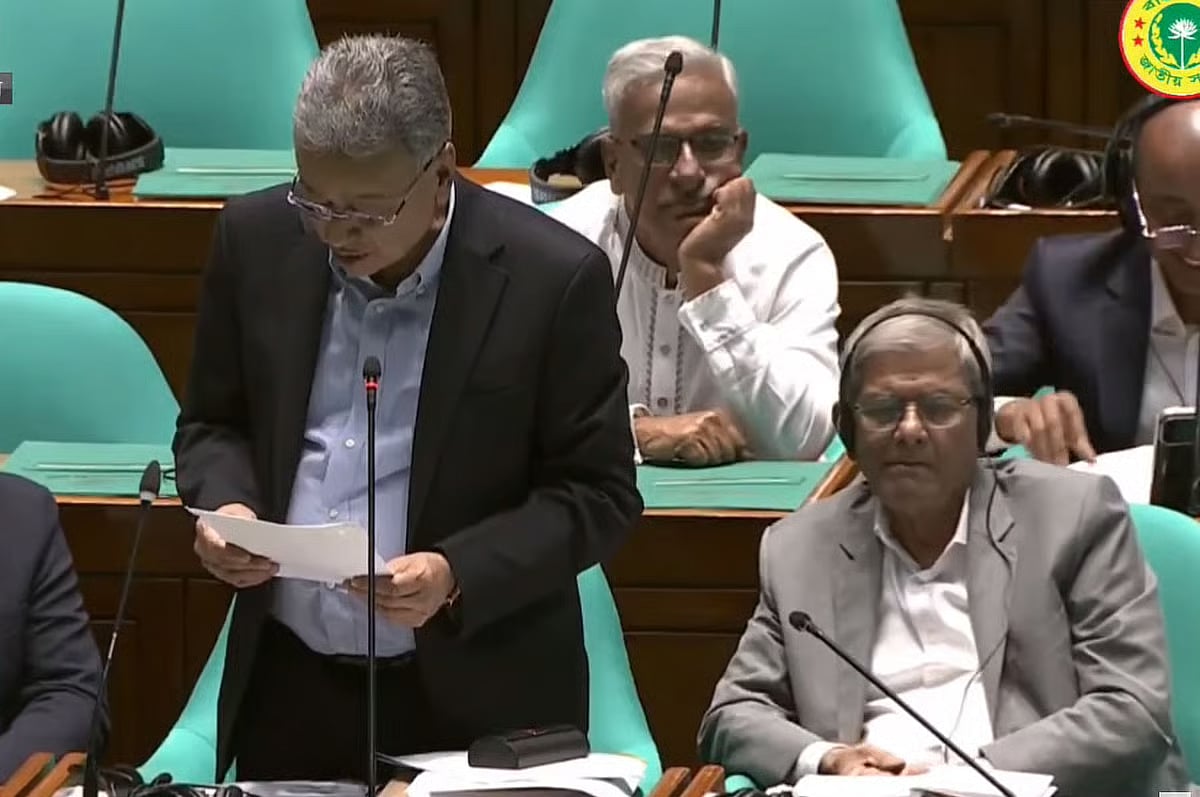
Speeches by ruling party lawmakers repeatedly praised Prime Minister Tarique Rahman’s leadership and the proposed budget. They described it as expansive, people-oriented and supportive of education, healthcare and agriculture.
According to them, the increased allocations for health, education, agriculture, social safety nets and employment reflected an effort to improve people’s quality of life. The government also argued that its proposal to reduce taxes on essential commodities would provide relief to ordinary people.
Opposition lawmakers, meanwhile, described the budget as overly ambitious and heavily dependent on borrowing. In their view, implementing such a large budget would be a greater challenge than preparing it.
They argued that its intended benefits would not be realised unless inflation was brought under control, debt pressures eased, revenue collection improved, corruption curbed and government spending made more efficient.
They also stressed the need for structural reforms. In addition, the opposition called for the introduction of an interest-free, zakat-based banking system and proposed changing the fiscal year to run from January to December.
The health sector also received significant attention during the budget debate. While lawmakers welcomed the government’s plans to increase hospital bed capacity and boost allocations, they highlighted the shortage of physicians, weak healthcare services and other problems at district and upazila levels.
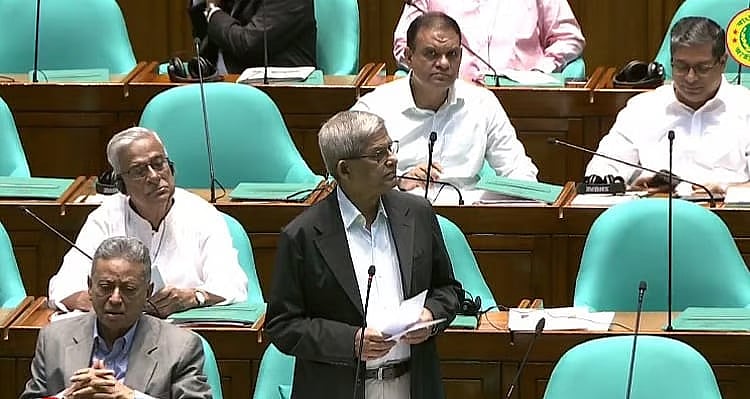
Their speeches also included calls for stronger drug control measures, improvements to local roads, educational institutions and embankments, as well as greater investment in agricultural projects and industrial development.
Criticism of Jamaat’s role in the Liberation War
One of the most debated political issues during this year’s budget discussions was the role of the current opposition party, Jamaat-e-Islami, during the 1971 Liberation War. BNP lawmaker Rafiqul Islam called for banning the politics of parties that had opposed the country's independence.
Several other lawmakers also criticised Jamaat’s role in the Liberation War. Senior BNP leaders, including Secretary General Mirza Fakhrul Islam Alamgir and Home Minister Salahuddin Ahmed, also criticised the party.
Local Government Minister Mirza Fakhrul Islam Alamgir said Jamaat should have apologised to the nation for its stance during the Liberation War, adding that the opportunity to do so still remained.
In his view, Jamaat would find it easier to pursue politics if it took a clear position on its role in 1971. He also urged the NCP to clarify its position on forming alliances with parties that had opposed Bangladesh’s independence.
Criticising Jamaat’s religion-based politics, Home Minister Salahuddin Ahmed said, “We acknowledge some of your roles in 1990 and 2024. But you cannot ignore the chapters of history that do not favour you.”
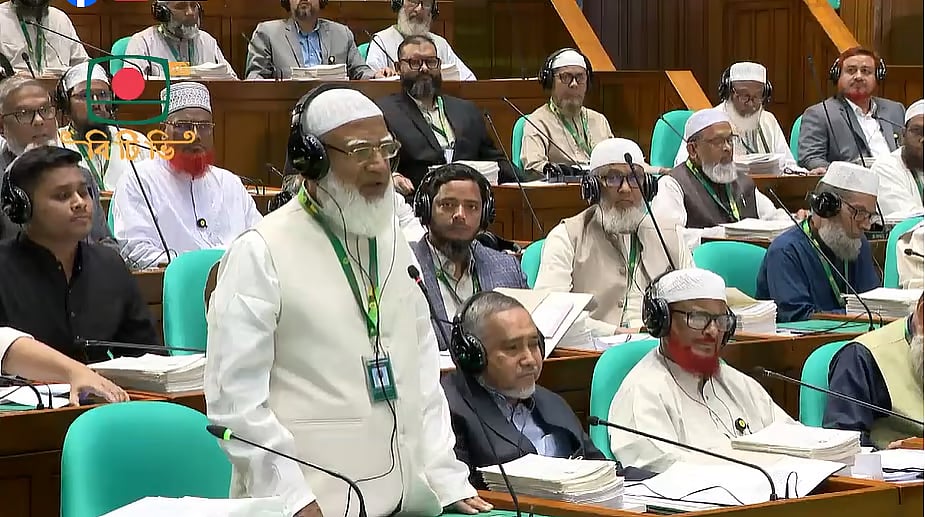
Although he did not directly explain his party’s role during the Liberation War, Jamaat lawmaker ATM Azharul Islam responded by raising a counter-question. He asked who would fill the political vacuum if Jamaat did not exist, and questioned whether the government intended to rehabilitate the Awami League.
Debate over Islami Bank
During the session, a motion tabled by Opposition Leader Shafiqur Rahman triggered a heated debate between the ruling party and the opposition over the ownership, management and political influence surrounding Islami Bank.
The opposition alleged that the bank’s shares had been seized with the assistance of the Directorate General of Forces Intelligence (DGFI). It called for the shares to be returned to what it described as the bank’s "rightful owners", the reinstatement of its former chairman and managing director, and the formation of a parliamentary inquiry committee.
The ruling party, on the other hand, accused the opposition of trying to destabilise Islami Bank for political gain. It alleged that following the mass uprising, the bank had been taken over under the slogan Naraye Takbir, during which various irregularities had occurred.
It also claimed that a flagship project of the bank had been used to finance Jamaat-e-Islami’s election campaigns. According to ruling party lawmakers, Tk 11 billion had been channelled through the project earlier, followed by another Tk 11 billion after 5 August 2024.
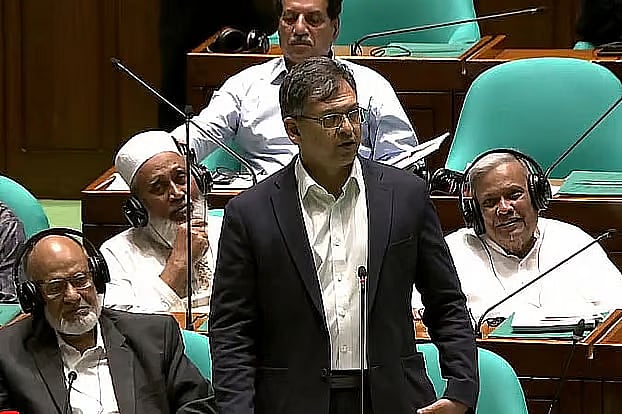
Beyond the scheduled debate, many opposition lawmakers also raised the issue of Islami Bank during the budget discussions. They sought the government’s position on loan defaults, money laundering, as well as agreements involving S Alam, Adani and Summit.
Debate over ‘push-ins’ postponed
A notice seeking a parliamentary debate on alleged push-ins by India’s Border Security Force (BSF) and border killings was submitted by Mir Ahmad Bin Kashem, a lawmaker from Bangladesh Jamaat-e-Islami.
The notice was accepted and a date was set for the discussion. However, on 14 June, the scheduled day of the debate, Deputy Speaker Kaiser Kamal announced that it had been postponed due to “unavoidable circumstances.”
When Bin Kashem questioned the decision, the deputy speaker said the discussion had been temporarily deferred because of time constraints during the budget session.
Questions over ministers’ absence
The opposition repeatedly questioned the absence of government ministers during the budget debate. Opposition leader Shafiqur Rahman also raised the issue, saying, “It is often seen that when a ministry is being discussed, no representative from that ministry is present in the House. Whether this is consistent with the dignity of Parliament is for the Speaker to decide.”
Speaker Hafiz Uddin Ahmad called on the chief whip to ensure ministers remain present in Parliament, saying no state business is more important than a parliamentary sitting.
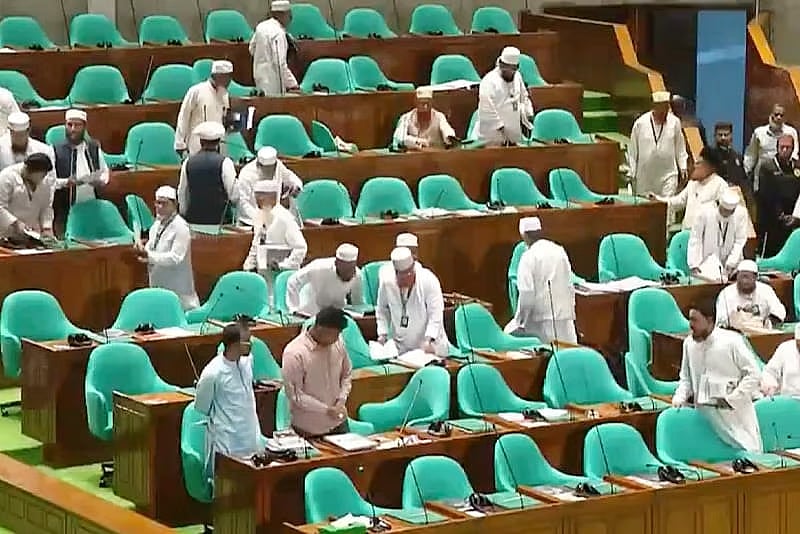
Motion thanking PM for foreign tour
During the current parliamentary session, Prime Minister and Leader of the House Tarique Rahman visited Malaysia and China from 21 to 26 June. The day after his return, on 27 June, Parliament unanimously adopted a motion expressing thanks to the prime minister.
The motion was tabled by Local Government Minister Mirza Fakhrul Islam Alamgir. It stated, “It is the opinion of this House that, in recognition of the unprecedented success of Prime Minister and Leader of the House Tarique Rahman’s visit to Malaysia and China from 21 to 26 June, this august Parliament extends its thanks to him.”
Speaking on the motion were Local Government Minister Mirza Fakhrul Islam Alamgir, Finance Minister Amir Khasru Mahmud Chowdhury and Opposition Leader Shafiqur Rahman. The motion was later adopted by voice vote.
Opposition walkout
The opposition staged a walkout on one day during the current session. On 28 June, during the budget debate, Local Government Minister Mirza Fakhrul Islam Alamgir and Home Minister Salahuddin Ahmed criticised Jamaat-e-Islami’s role in the 1971 Liberation War and the party’s politics.
The opposition then walked out of Parliament, alleging that two bills had been introduced without prior notice, copies of the bills had not been provided in advance, they had been denied the opportunity to speak on points of order, and the ruling party had been allotted comparatively more speaking time.


