

The Jatiya Sangsad (national parliament) has formed a 12-member special committee, chaired by home minister Salahuddin Ahmed, to oversee amendments to the constitution.
The committee was constituted in parliament on Monday night. However, the opposition rejected the proposal and staged a walkout from the house in protest.
Chief whip Nurul Islam, acting on behalf of leader of the house Tarique Rahman, tabled the proposal to constitute the special committee.
The committee had originally been intended to comprise 17 members, with the opposition invited to nominate five representatives. However, the opposition declined to submit any names, maintaining its demand for the formation of a constitutional reform council instead.
Addressing parliament, the chief whip said that despite several rounds of discussions with opposition leaders, they had refused to nominate any members. Consequently, the proposal was to establish the committee with 12 members while leaving five positions vacant.
He added that the committee would be reconstituted to include opposition nominees should they decide to participate at a later stage.
Home minister Salahuddin Ahmed has been made chairman of the committee. Its members are chief whip Nurul Islam; law minister Md Asaduzzaman; ruling BNP (Bangladesh Nationalist Party) members of parliament Zainal Abedin, Mir Helal Uddin, Farzana Sharmin, Shakila Farzana and Mahmudul Haque; Ganosamhati Andolan MP Zonayed Abdur Rahim Saki; Bangladesh Jatiya Party (BJP) MP Andaleeve Rahman Partho; Gono Odhikar Parishad MP Nurul Haque; and Islami Andolan Bangladesh MP Md Oliullah.
Following the chief whip’s proposal, leader of the opposition and ameer of Jamaat-e-Islami, Shafiqur Rahman, said the issue had been under discussion since the very first sitting of the current parliament and that the opposition had already made its position clear at that time.
He acknowledged that the chief whip had contacted the opposition on several occasions but said they had never indicated any willingness to nominate members to the proposed committee.
He stated that the opposition remained committed to the mandate given by the people, adding that its members had taken two oaths—one as members of parliament and another as members of the proposed constitutional reform council—to implement the verdict delivered through the referendum.
"If this committee is being formed to bypass that process, then we reject the proposal. We remain firm in our previous position," Shafiqur Rahman said.
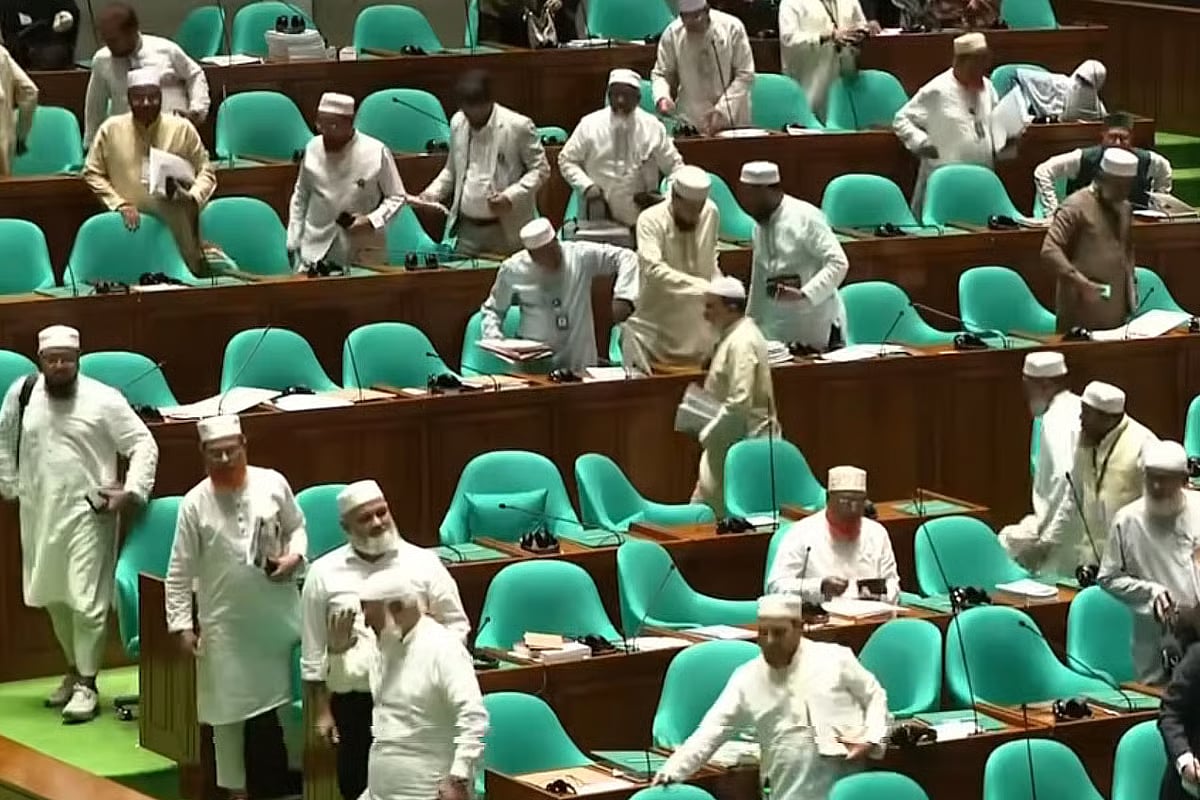
"The wishes and opinions of the people should neither be disregarded nor disrespected. Out of respect for the public mandate, not only will we refrain from participating in this committee, but we are also walking out of this sitting in protest as the people's verdict is not being honoured," he further stated.
Following his remarks, opposition MPs left the chamber. In their absence, parliament approved the proposal establishing the special committee.
Home minister’s response
Following the opposition leader's speech, home minister Salahuddin Ahmed addressed the house. At that point, deputy speaker Kaiser Kamal requested opposition members to remain and hear the minister's remarks. However, they proceeded with their walkout.
Salahuddin Ahmed said that while the opposition's stance might reflect its political judgement, any necessary changes must be introduced within the framework of the existing constitution.
He noted that the current constitution had provided the legal basis for the election, the formation of parliament, the president's address, and the subsequent parliamentary debate involving both the government and the opposition. Consequently, he argued, the country's present constitutional order could not simply be disregarded.
Responding to the opposition's reference to taking two separate oaths, the home minister stated, "There is no constitutional basis for taking an oath as a member of a constitutional reform council. The July charter implementation order is unlawful and constitutes colourable legislation."
He argued that the constitution must first be amended and that, if parliament subsequently incorporated provisions for a constitutional reform council through political consensus, the matter could then proceed accordingly.
He further said that even implementation of the referendum's verdict would require constitutional amendments, and that the special parliamentary committee on constitutional amendment was therefore the appropriate forum for those discussions.
According to the home minister, the committee will consult members of the judiciary, legal professionals, constitutional experts, intellectuals, newspaper editors, other stakeholders and the political parties that signed the July national charter.
Parliament will also debate the matter before an 18th constitutional amendment bill is introduced on the basis of the committee's recommendations, he added.
Background to the dispute: Constitutional reform vs. constitutional amendment
The July national charter was prepared by the national consensus commission after consultations with political parties. The charter contains 48 proposals relating to the constitution, several of which involve fundamental constitutional reforms. BNP has expressed its dissent to some of those proposals. The party supports constitutional amendment based on its own alternative proposals.
On the other hand, Jamaat-e-Islami, the National Citizen Party (NCP) and other opposition alliance partners are in favour of implementing the charter’s constitutional proposals in their entirety through a constitutional reform council.
They regard the process not as a conventional constitutional amendment but as a “comprehensive constitutional reform”.
A referendum was held on the implementation of the charter's 48 constitutional proposals. During that process, the BNP's dissenting views on the fundamental reform proposals did not get importance in the final outcome.
Following the victory of the 'Yes' vote in the referendum, MPs were expected to serve not only in parliament but also as members of the proposed constitutional reform council.
However, the council has not been constituted because MPs elected from the BNP and its allies have declined to take the oath required to serve as members of the constitutional reform council. Opposition MPs supporting the council have taken that oath.
Under the July national charter implementation order, the deadline for convening the inaugural session of the constitutional reform council expired on 15 March.


